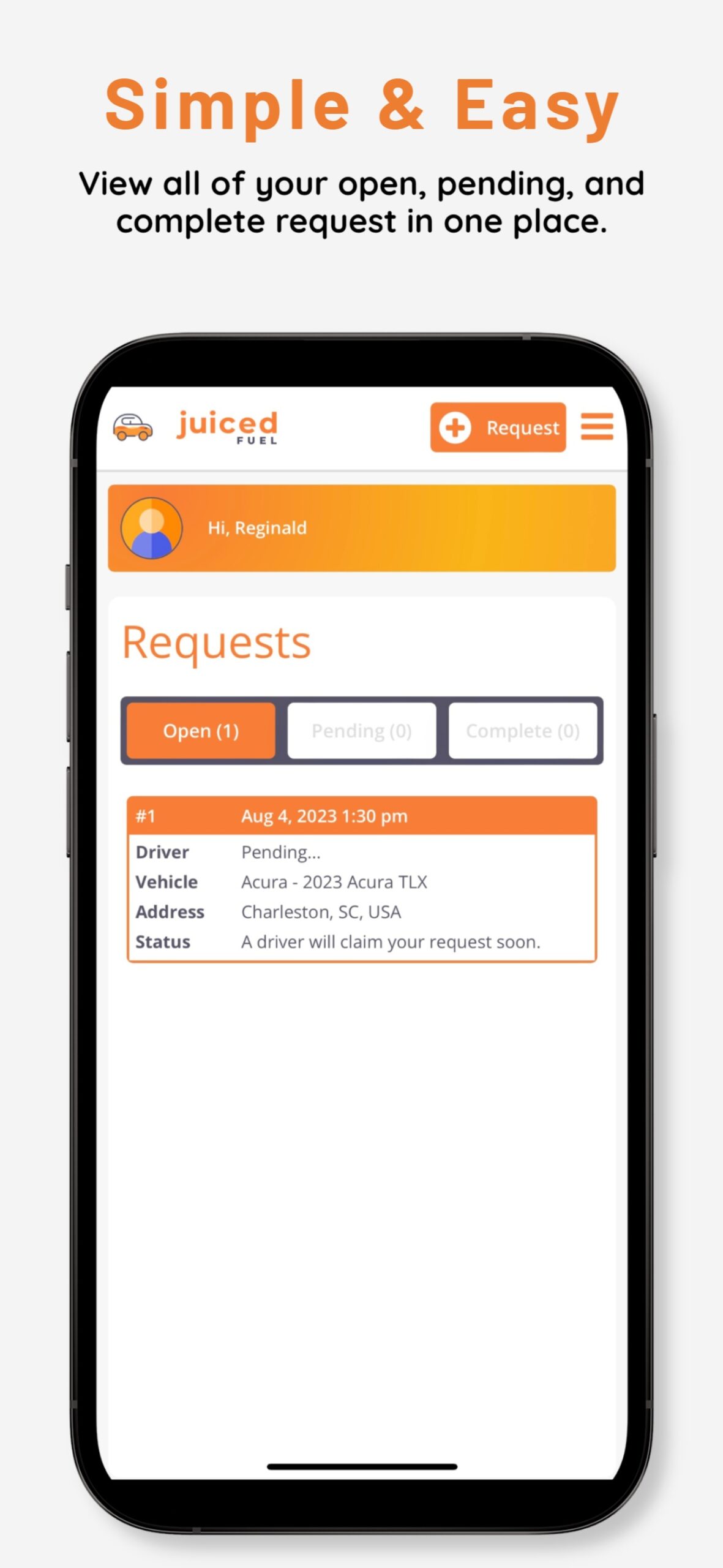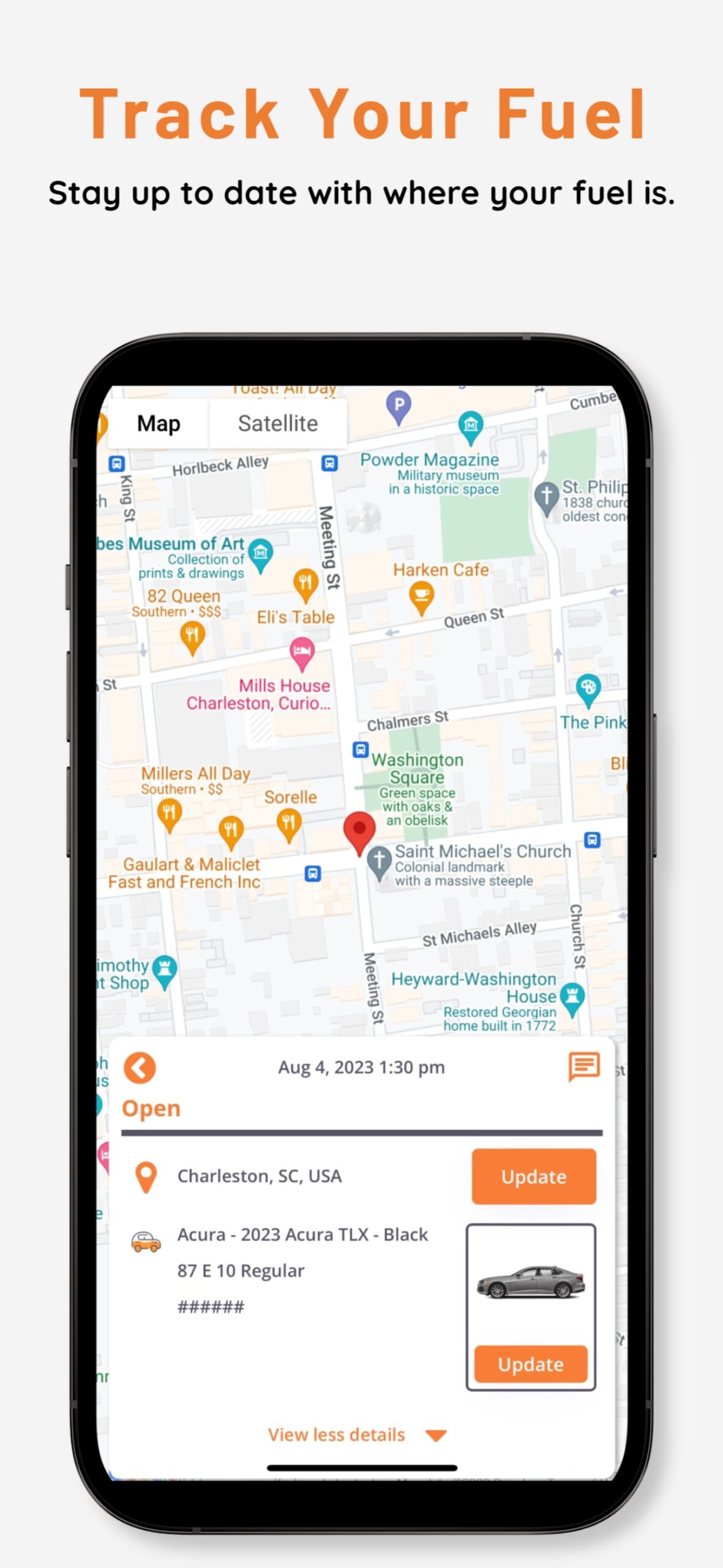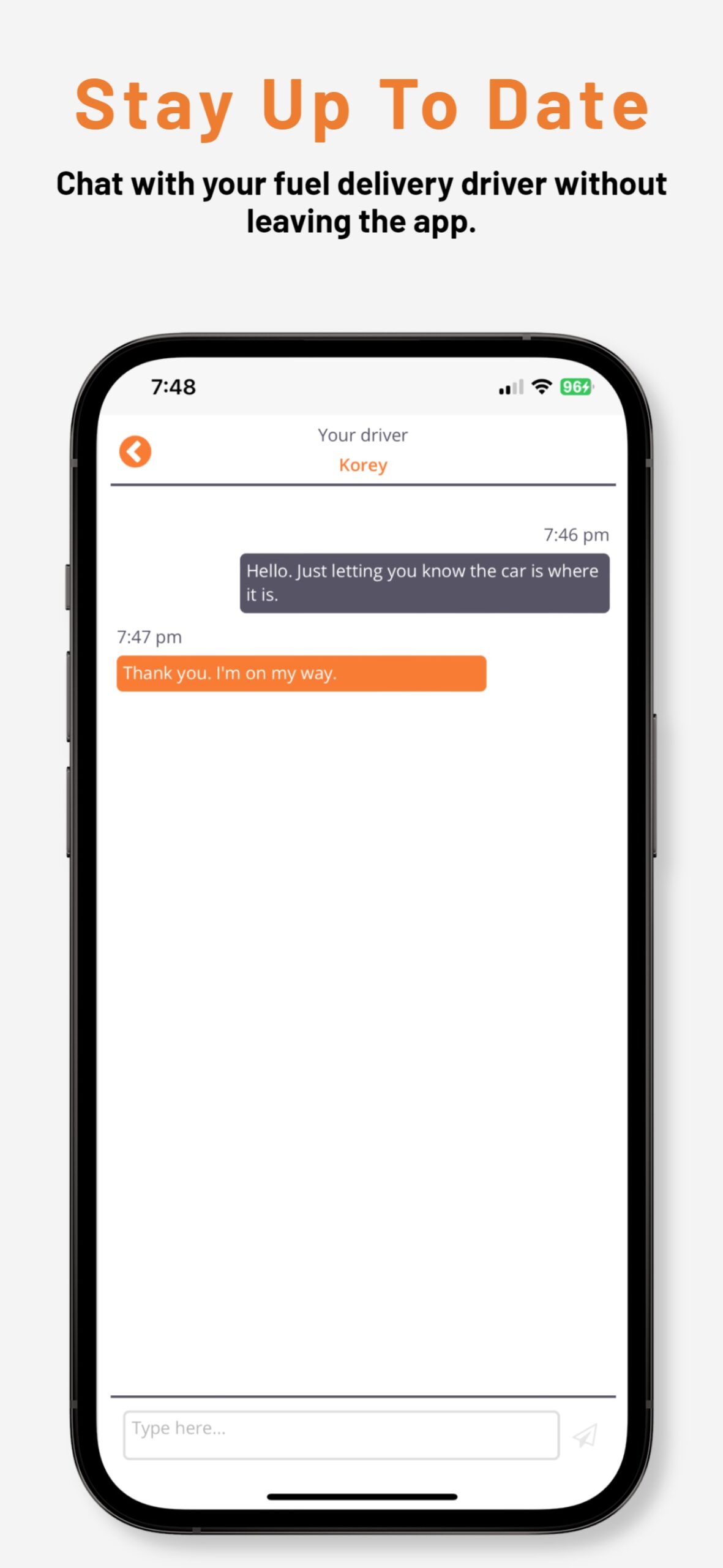

Juiced Fuel

Ditch The Pump. Never Stop for Gas Again

On-Demand Fuel Delivery System

Overview

Juiced Fuel is an on-demand fuel delivery platform designed to eliminate the inefficiencies of traditional refueling. Instead of driving to gas stations, users can schedule fuel delivery directly to their parked vehicles through a mobile or web app. The service targets individual drivers, businesses, and fleets, offering convenience, time savings, and improved accessibility—particularly for those with limited mobility or demanding schedules.

Developed from late 2021 through 2024, Juiced Fuel evolved through three major versions, progressing from a minimum viable product to full mobile deployment on both the App Store and Google Play. The system was built with Bubble and extended natively using BDK Native, supported by integrations with Stripe for payments, Google Maps APIs for location accuracy, Twilio for messaging, and additional platforms like Firebase, OneSignal, and HubSpot for analytics and customer engagement.

The application provides a complete ecosystem: user registration, vehicle and payment management, fuel scheduling, real-time delivery tracking, and administrative dashboards for dispatch and driver coordination. It also incorporates reporting tools, environmental impact metrics, and automated billing.

The project’s mission was to validate and scale a safer, more efficient, and environmentally conscious way to refuel. By replacing unnecessary trips to gas stations with optimized mobile delivery, Juiced Fuel demonstrates how digital logistics can reduce emissions while improving daily convenience for modern consumers.
Problem

Current fuel purchasing methods are inefficient, inconvenient, and environmentally harmful. Drivers must make separate trips to gas stations, wasting time and fuel while dealing with fluctuating prices and inconsistent service quality.

Many consumers—especially the elderly, disabled, or those in rural areas—face accessibility challenges, while health-conscious users are concerned about the germs and contaminants found on public pumps.

From an environmental standpoint, these unnecessary vehicle trips contribute to additional CO₂ emissions and urban congestion. The entire process is outdated, creating frustration, inefficiency, and avoidable environmental impact for individuals and businesses alike.

Solution

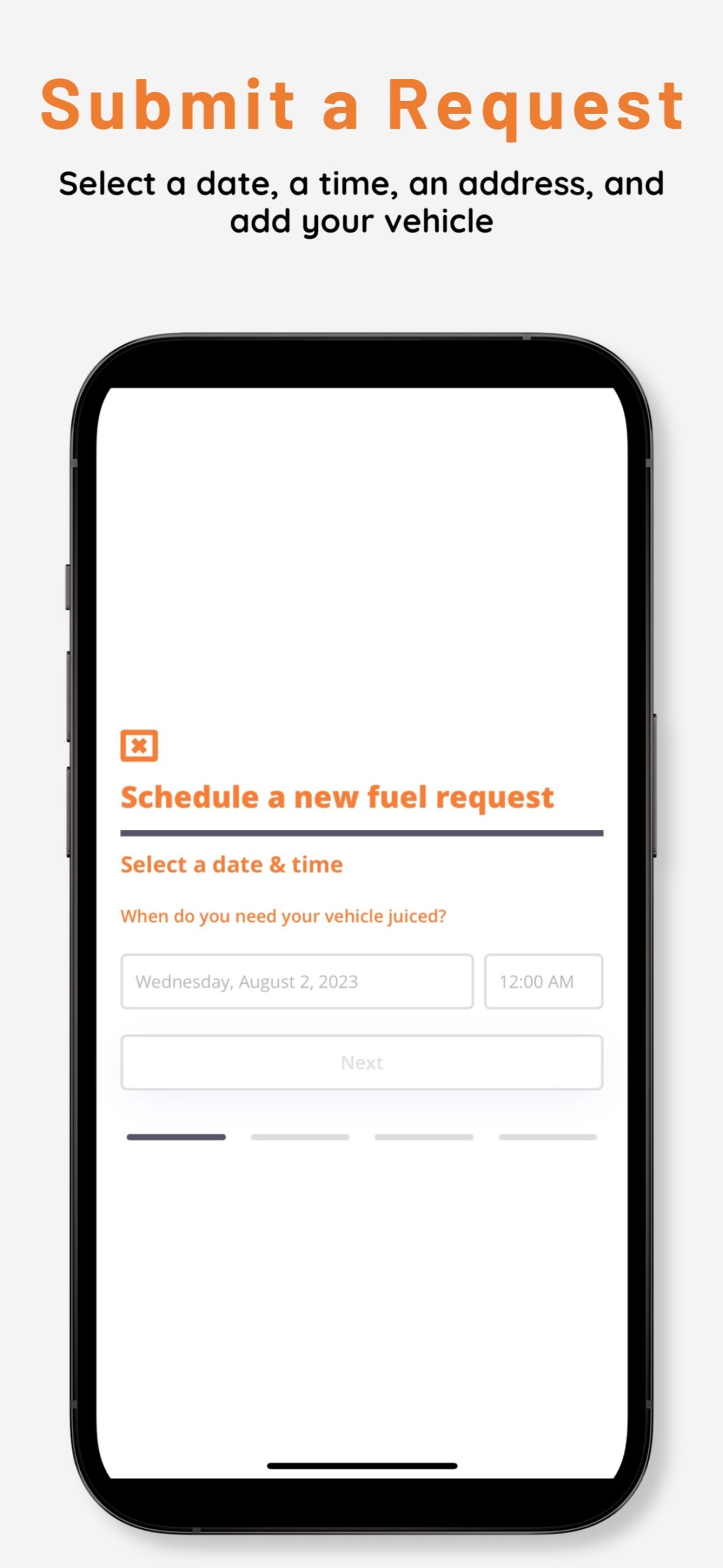
Juiced Fuel provides an on-demand fuel delivery service that brings gas directly to consumers wherever they are—at home, at work, or on the road. Through a mobile and web app, users can schedule refueling, manage vehicles, and make secure payments without visiting a gas station.

The platform uses dynamic pricing to offer competitive rates, integrates GPS and route optimization to ensure fast delivery, and provides a completely contactless experience for safety and convenience.

By reducing unnecessary trips, the service not only saves time and money but also cuts emissions, supports accessibility, and aligns with growing environmental and technological expectations for modern mobility solutions.

Description

Juiced Fuel is a cross-platform application that simplifies the refueling process by enabling customers to request and receive fuel directly at their chosen location. Built with Bubble and extended through native integrations, the platform supports secure payment processing via Stripe, real-time communication through Twilio, and precise delivery coordination using Google Maps and Geolocation APIs.

The system includes separate dashboards for customers, drivers, and administrators, allowing for efficient management of fuel requests, user accounts, payments, and logistics. It also incorporates features for analytics, reporting, and environmental tracking to monitor business performance and sustainability impact.

By combining automation, user-friendly design, and real-time operations, Juiced Fuel creates a seamless digital ecosystem for both customers and service providers, transforming the way people access fuel in a connected and environmentally aware marketplace.

Goal

The goal of Juiced Fuel was to validate and scale the concept of on-demand fuel delivery by proving its market viability, operational efficiency, and positive environmental impact. The project aimed to create a seamless user experience that transformed refueling from a time-consuming errand into an automated service that enhanced convenience and reliability.

Beyond user adoption, Juiced Fuel sought to demonstrate measurable reductions in emissions, fuel waste, and travel time, while fostering partnerships with local fuel suppliers and eco-friendly producers to expand service capabilities.

Ultimately, the initiative was designed to establish a sustainable, accessible, and data-driven model for the future of fuel delivery, redefining how consumers and businesses managed their refueling needs in a modern, environmentally responsible economy.

Product

A Custom Application

Stage

A new app idea

Date

October 19, 2021

Budget

$5000+

Details

Key Features

Payment Management System
Notifications Management System
Vehicle Management System
Messaging System
Maps & Location Services
GPS Tracking System
Analytics Dashboard
User Account Management
Fuel Request Management System

Key Integrations

Stripe
Twilio | Comms
Twilio | SendGrid
OneSignal
Google Maps
Google Firebase
HubSpot
Microsoft Clarity

Requirements

Tech Stack

Approach

nocode/lowcode

Language

Bubble

Framework

Bubble

Database

Bubble

Approach

Our approach to solving the inefficiencies of traditional refueling centered on designing a fully integrated digital platform that streamlined every aspect of the fuel delivery process. We began by developing a cross-platform system built on Bubble for rapid prototyping and scalability, later extending it natively using BDK Native to ensure a seamless mobile experience across iOS and Android. This allowed for consistent functionality, real-time updates, and responsive performance while maintaining low development overhead.

From a technical perspective, we architected the platform around three core user groups—customers, drivers, and administrators—each supported by distinct interfaces and role-based permissions. Customers could create accounts, manage vehicles, schedule fuel deliveries, and process secure payments through Stripe integration. Drivers operated within a dedicated dashboard that displayed available delivery requests, optimized routes using Google Maps and Geolocation APIs, and provided live status updates. Administrators managed logistics, user accounts, and operational data through a centralized control panel, complete with analytics, financial reporting, and activity monitoring.

We implemented Twilio APIs for SMS notifications and SendGrid for transactional email delivery, ensuring users received real-time updates on order confirmations, driver locations, and delivery completions. Geolocation data was handled with high precision through Google’s API suite, enabling accurate vehicle positioning and route optimization to minimize travel distance and fuel waste. OneSignal powered our push notification campaigns, supporting both engagement and retention efforts.

Security and compliance were integrated throughout the system. All payment data adhered to PCI DSS standards, with end-to-end encryption on sensitive user information. We used role-based access control for internal tools, enforced HTTPS for all communication channels, and maintained database backups to preserve data integrity and uptime.

Operationally, the platform incorporated environmental impact tracking, automated billing, and performance analytics through Firebase and HubSpot integrations. This combination of real-time communication, optimized logistics, and scalable architecture allowed Juiced Fuel to operate as a safe, efficient, and environmentally conscious alternative to traditional fuel stations, validating the viability of on-demand refueling within a digital-first framework.

Outcomes

Active Users
1000+
Revenue
$350,000+

Lessons Learned

  • Rapid prototyping with no-code tools: Using Bubble allowed for fast iteration and validation of core features, but highlighted the need for early planning around scalability and performance limitations.
  • Native integration complexity: Extending the web app into fully functional native mobile apps through BDK Native required additional optimization for API calls, data synchronization, and offline stability.
  • API coordination: Integrating multiple third-party services—Stripe, Google Maps, Twilio, and OneSignal—proved essential for core functionality but demanded strict version control, documentation, and consistent testing environments.
  • Data security and compliance: Handling payment data and user information emphasized the importance of end-to-end encryption, PCI DSS compliance, and routine security audits.
  • Operational logistics: Building a digital system for a physical delivery service revealed that backend efficiency must align with real-world logistics, including driver coordination, route optimization, and service timing.
  • User experience consistency: Maintaining UI/UX consistency across web and mobile platforms was critical for adoption and trust, reinforcing the value of clear navigation and responsive design systems.
  • Real-time communication: Implementing Twilio and push notifications showed how essential timely updates are for both customer satisfaction and operational reliability.
  • Scalability and performance tuning: As the user base grew, we learned the necessity of database indexing, asynchronous processing, and cloud resource scaling to maintain sub-two-second response times.
  • Market adoption curve: Transitioning users from traditional refueling to an on-demand delivery model required strong marketing education and trust-building to overcome skepticism about safety and reliability.
  • Environmental tracking: Measuring emissions saved and route efficiency created both a technical and strategic advantage, reinforcing the app’s sustainability value proposition.
  • Cross-team coordination: Clear communication between developers, designers, and logistics personnel proved essential for aligning digital feature development with physical service delivery capabilities.
  • Post-launch iteration: Continuous feedback collection and analytics were vital for refining user workflows, adjusting delivery timing windows, and improving pricing algorithms after deployment.
  • Documentation discipline: Maintaining comprehensive documentation—from APIs to deployment scripts—simplified onboarding, debugging, and eventual project handoff to new development partners.

Gallery

Working with Knocode on Juiced Fuel was a genuinely collaborative experience. The process had its ups and downs, but every challenge helped shape a stronger, more refined product. The team’s adaptability and problem-solving mindset made all the difference, and together we created a platform that truly changes the way people think about refueling.

Ready to bring your idea to life?

Let's discuss how we can turn your vision into value and get your idea in front of the people who need it.